

Health and Physical Education at Orewa College focuses on the wellbeing of students, others, and society through learning in movement and health related contexts. Students develop the knowledge, skills, and attitudes needed to make informed decisions and lead healthy, active lives.
Health and Physical Education foundations
Key concepts that guide learning and wellbeing
There are four underlying and interdependent concepts at the heart of the Health and Physical Education learning area:
Hauora is a Māori philosophy of wellbeing that includes the dimensions taha wairua, taha hinengaro, taha tinana, and taha whānau, with each dimension influencing and supporting the others.
Attitudes and values include positive and responsible attitudes towards personal wellbeing, respect and care for others and the environment, and a strong sense of social justice.
The socio ecological perspective supports students to understand the interrelationships between individuals, others, and society.
Health promotion focuses on developing and maintaining supportive physical and emotional environments through personal and collective action.
Year 7
Building hauora and a positive start to secondary school
In Year 7 Health and Physical Education, the focus is on overall wellbeing, known as hauora. Our school values programme, Manaaki Orewa, encourages students to be the best they can be.
At the beginning of Term 1, the orientation programme is designed to help students feel comfortable in their new classes and supported at school. Learning focuses on friendship skills and resilience.
In Term 2, classes explore Changes at Adolescence, covering the emotional, social, and physical changes experienced during puberty.
In Term 3, students focus on personal health and fitness and develop an individual plan to improve wellbeing.
Year 8
Developing movement skills, identity, and wellbeing
In Year 8 Physical Education, students develop movement skills, confidence, and teamwork through a range of games, activities, and challenges. They explore how their bodies move and how strategies can be adapted to improve performance.
Through movement, students build hauora, resilience, and leadership while reflecting on fair play and inclusion. They learn to set goals, collaborate with others, and respond positively to feedback in a supportive and active environment.
In Year 8 Health, students explore what contributes to personal and collective wellbeing across physical, mental, emotional, social, and spiritual dimensions. They examine how relationships, identity, and environments influence health and learn to make informed, values based decisions.
Years 9 and 10
Deepening understanding through inquiry and critical thinking
Students in Years 9 and 10 deepen their understanding of Health and Physical Education through independent inquiry, problem solving, and critical analysis.
The learning areas include:
- Health
- Physical Education
- Sports Pathways including Rugby, Football, Volleyball, and Netball
- Outdoor Education
Years 11 to 13
Specialised pathways and NCEA preparation
Students in Years 11 to 13 further develop their skills and knowledge through specialised Health and Physical Education courses and practical applications. Learning prepares students for NCEA assessments, scholarship opportunities, and pathways beyond school.
| Year level | NCEA level | Courses offered |
|---|---|---|
| Year 11 | Level 1 | Physical Education, Health |
| Year 12 | Level 2 | Physical Education, Health, Sports Leadership, Outdoor Education, Recreation |
| Year 13 | Level 3 | Physical Education, Health, Community Sports Leadership, Outdoor Education, Recreation |
| A Scholarship course is available for highly motivated and high achieving students. | ||
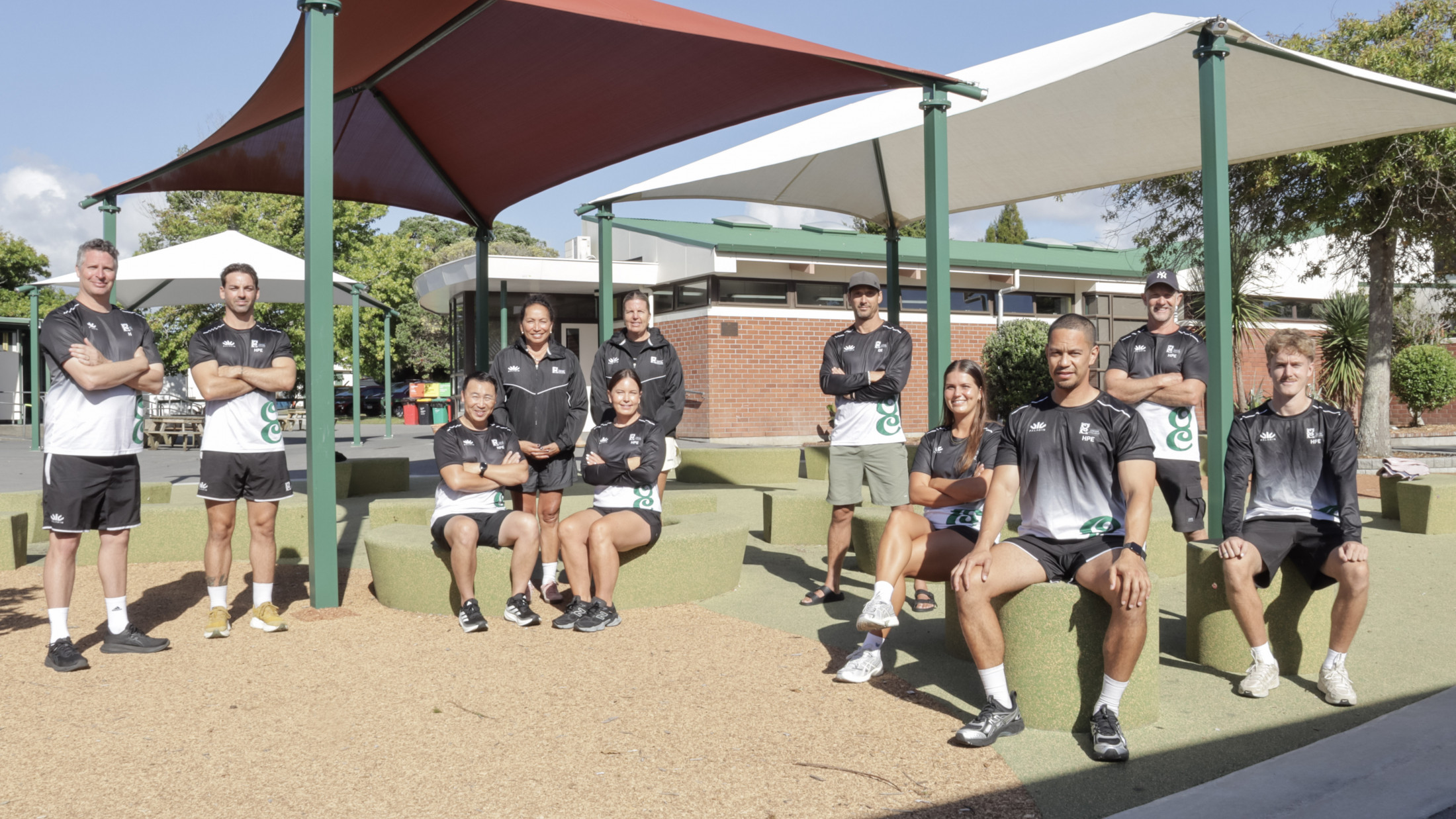
2026 Health & Physical Education Department
Contact
Find out more about Health and Physical Education at Orewa College
For more information about Health and Physical Education subjects, please contact:
Head of Department: Asher Akroyd
Email: [email protected]